The 6-block framework to write prompts Claude nails on the first try.
Stop guessing. Role, Task, Context, Reasoning, Stop Conditions, Output: the reproducible structure power users run every day.
Buy for €1.99 →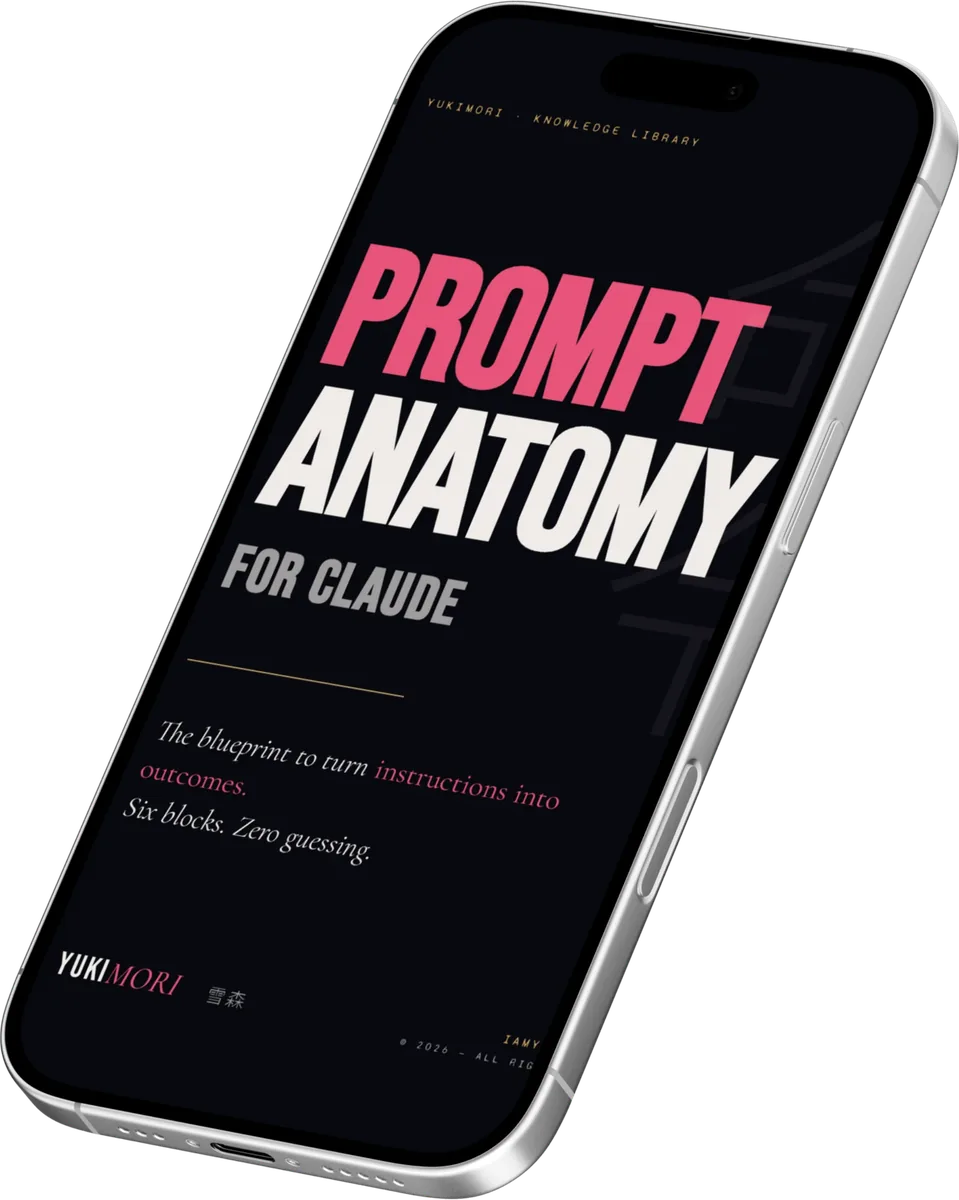
Six blocks. One framework.
Every prompt that works has the same anatomy. Inside the guide: the full framework, copy-paste templates for each block, and ten real prompts dissected line by line.
Role
A full identity, not a job title. Level, years, specialty: the role Claude wears before saying a word.
Task
What it must deliver. Not vaguely. The gap between "help me with the email" and a text ready to send.
Context
The copy-paste block that makes the model actually yours. What it knows, what it doesn't, why it's working on this problem.
Reasoning
Tell Claude HOW to think, not just what to do. The step that separates beginners from power users.
Stop Conditions
The boundaries. What it must never do, when to stop, when to ask. The block that keeps the answer inside the fence.
Output
The exact shape you want the answer in. Markdown, table, bullets, tone, length: defined up front, not at the tail.
"Claude isn't the problem.
— from the guide
Your prompt is."
How you actually use it.
Prompt Anatomy isn't a bag of tricks. It's a method written for people who work with Claude every day and are tired of regenerating the same answer until it becomes tolerable.
The book starts from the real problem: Claude produces imprecise output when the instructions are ambiguous — not because the model is limited, but because the prompt leaves too much room for interpretation. The solution the PDF builds, chapter by chapter, is a six-block framework — Role, Task, Context, Reasoning, Stop Conditions, Output — that makes explicit what usually stays implicit.
Every block is explained with a broken prompt next to a working one, so you can see what changes line by line. The Chain Technique shows you how to link multiple prompts in sequence for projects that don't fit in a single response: brief, research, first draft, revision, final format — each step with its own dedicated instruction. The When Prompts Fail section is a diagnostic guide for understanding why an output went wrong and rewriting the prompt in a targeted way, instead of repeating the same mistake with different words.
The PDF includes five industry-ready prompts (marketing, research, writing, coding, analysis), the Screenshot Method for using images as context when text isn't enough, a Reusable Prompt Library organized by task, ten complete prompts annotated step by step, three operational bonuses, and a 7-Day Challenge that walks you — in the right order — through building the habit of writing prompts that work the first time.
Eighteen chapters in total. The operational payoff starts with the first prompt you rewrite following the structure. "Claude isn't the problem. Your prompt is."
Honest about who this is for.
- You use Claude every day and feel you're still "hoping" for the right prompt.
- You write copy, code, research or strategy and want reproducible results.
- You've read a few X threads and finally want a complete system.
- You want to grasp the framework in one evening and apply it the next day.
- You're hunting for "the magic prompt" to paste without understanding why.
- You want an interactive video course — this is a workbook, you read and apply.
- You only ask Claude basic questions and that's enough for you.
- You want an academic manual. This is practical, dense, no filler.
Four pages, no pitch.
Best way to know if it's for you is to look inside. Real pages from the PDF, as they are.
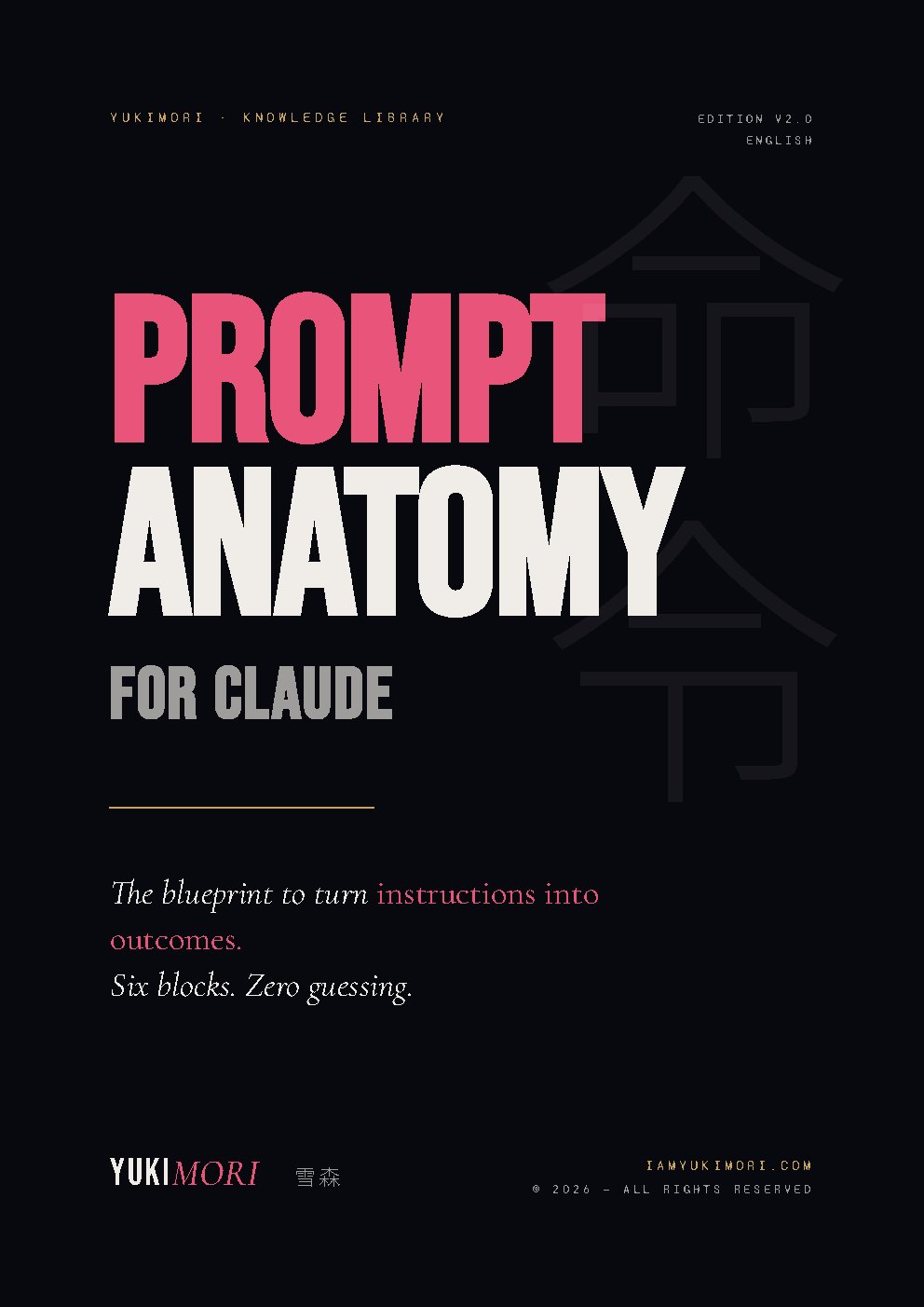
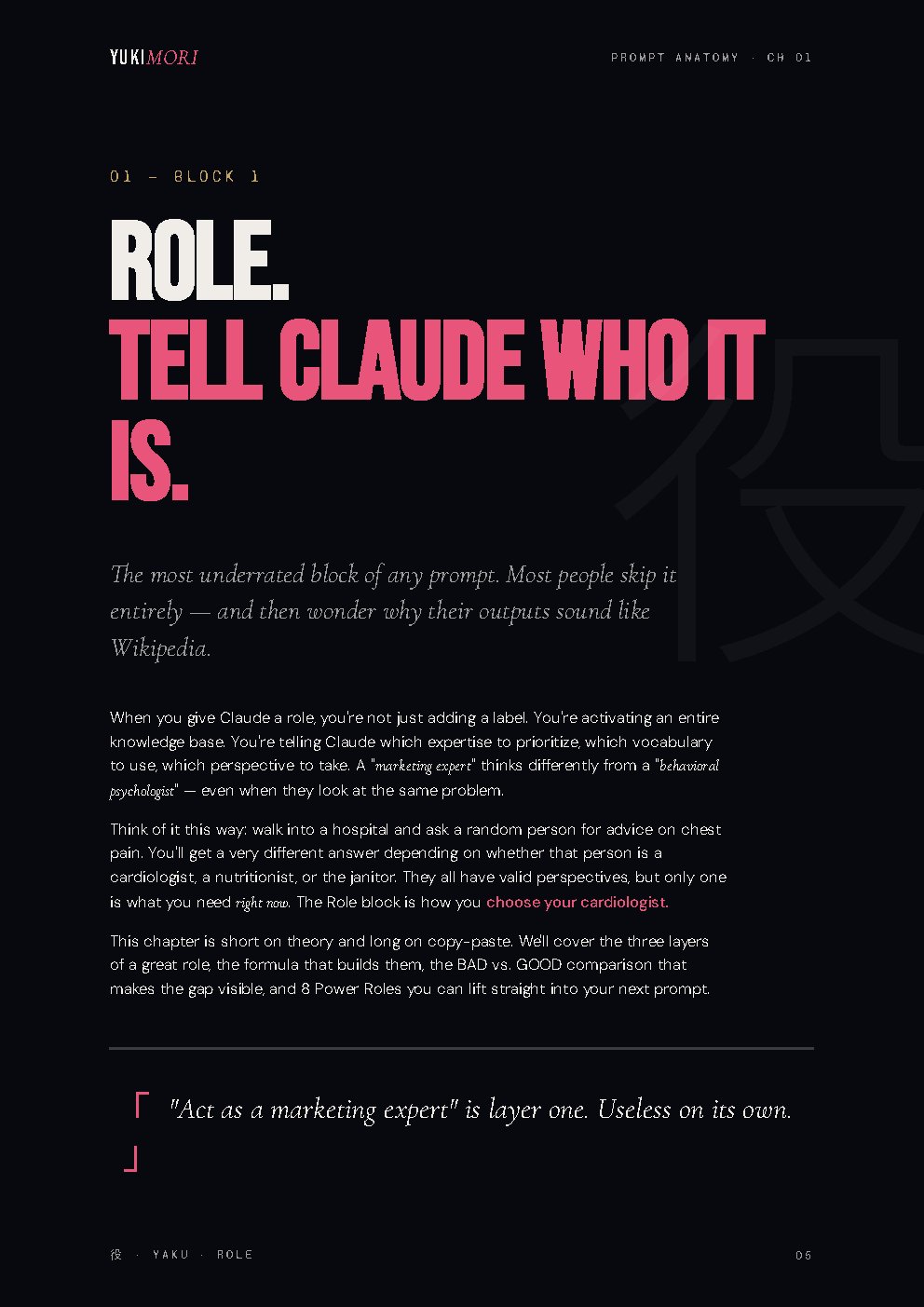
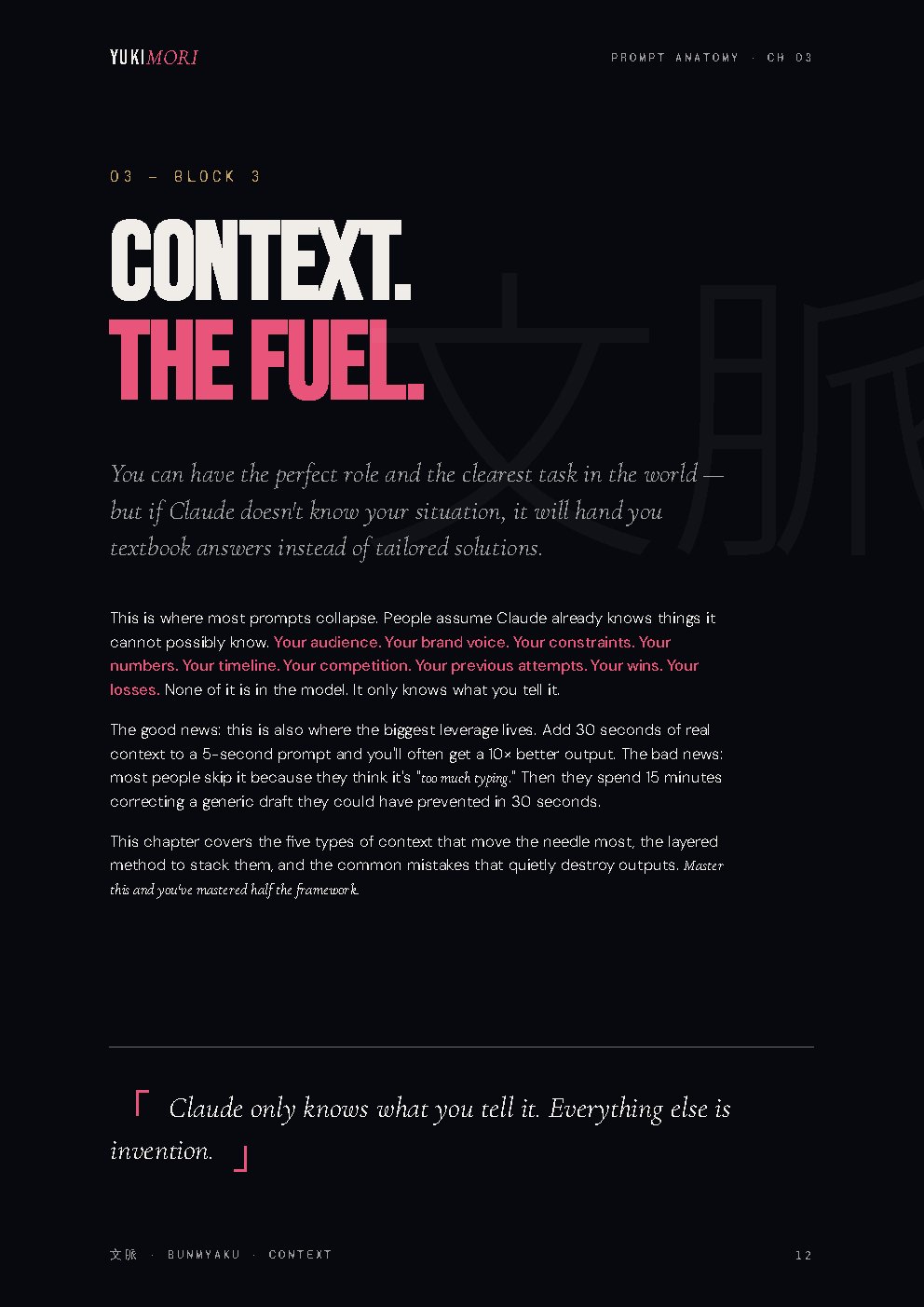
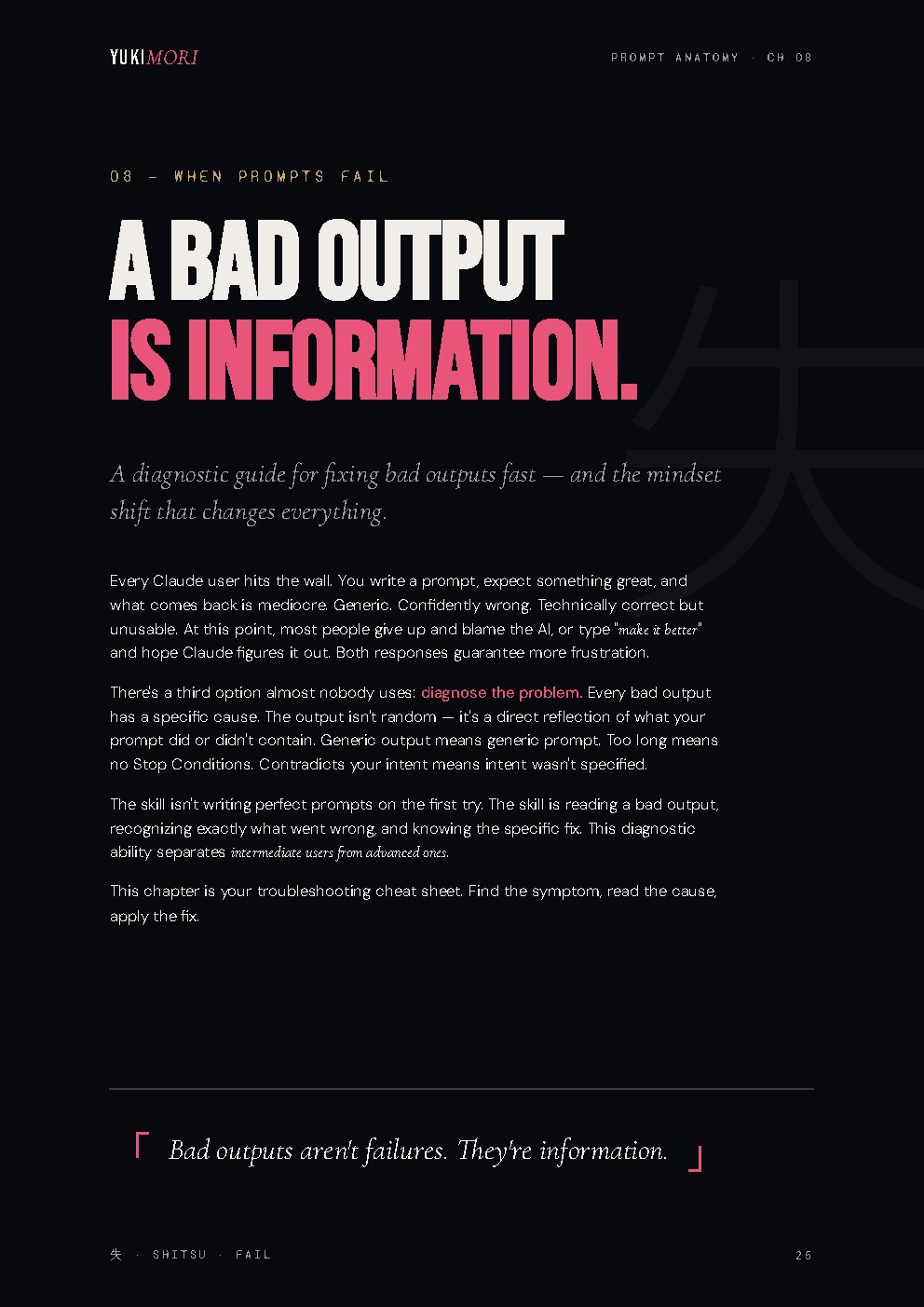
These are 4 of the 43 pages.